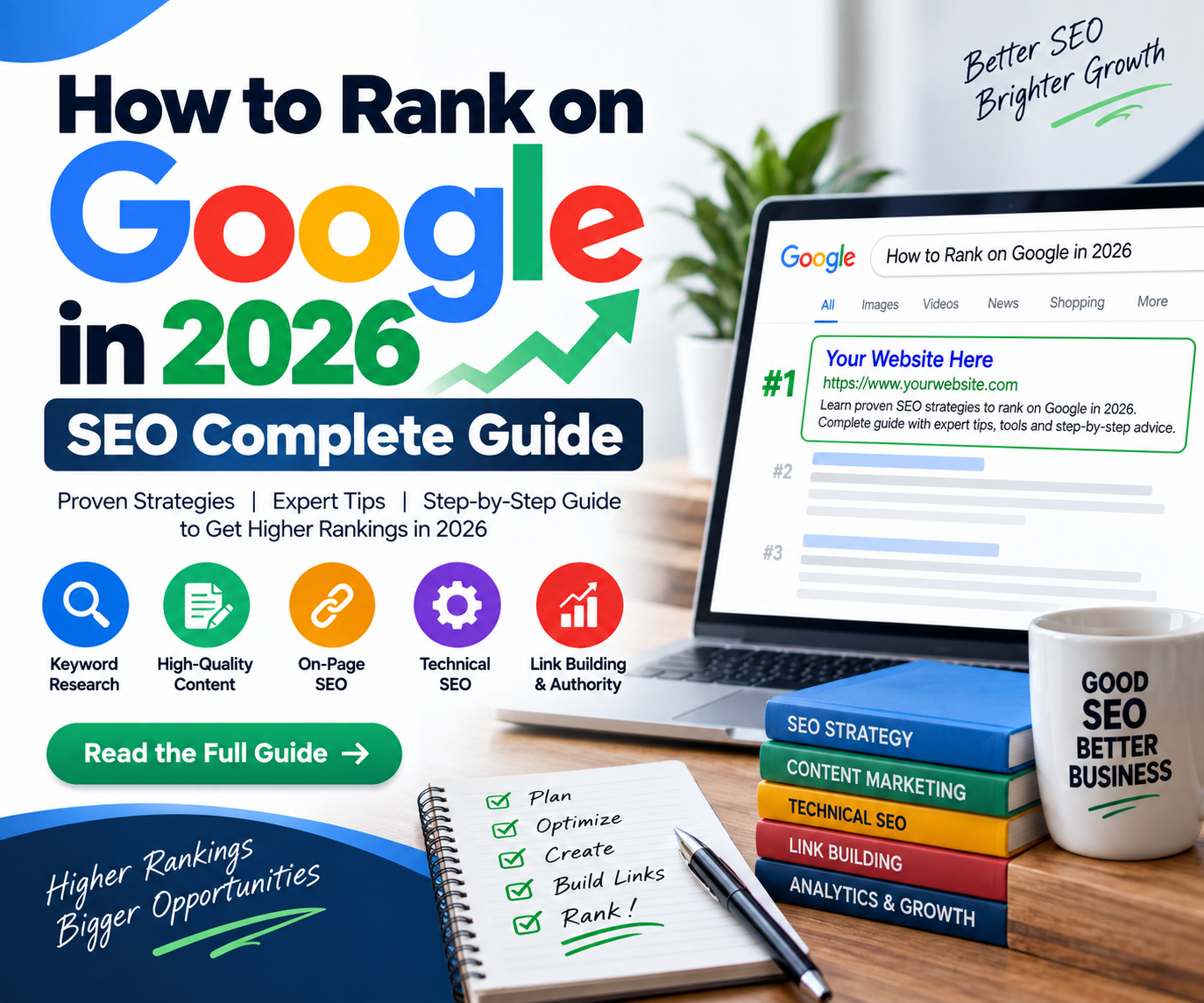
SEO in 2026 is no longer only about reaching the first page of traditional search results. Google now combines standard listings, featured snippets, local results, videos, and AI Overviews to answer users faster. For beginners, the best strategy is simple: create useful content, make your website technically strong, prove your expertise, and structure information so both people and search systems can understand it.
Understand Search Intent First
Before creating any page, identify what the searcher really wants. A keyword may have informational, commercial, transactional, or local intent. Someone searching for a tutorial expects clear steps, while someone comparing providers wants services, proof, pricing signals, and contact options.
Study the current search results for your target topic. Notice the page types Google rewards, the questions people ask, and the level of detail successful pages provide. Do not copy competitors. Instead, identify what they have missed and create a more complete, clearer, and more trustworthy answer.
Create Helpful, Original Content
Google continues to reward content that satisfies users instead of content written only for algorithms. Each page should answer the main query quickly and then provide useful supporting information.
Use descriptive headings, short paragraphs, examples, FAQs, tables where helpful, and natural internal links. Include first-hand experience, original observations, expert input, screenshots, case studies, or data whenever possible. These elements make your content harder to replace with generic text.
For local businesses, a phrase such as seo service in lahore should appear naturally inside relevant content rather than being repeated across every paragraph. Search engines are increasingly capable of understanding topics, entities, locations, and context without excessive keyword repetition.
Optimize Titles, Headings, and On-Page Elements
Write a unique title tag that clearly describes the page and encourages clicks. Use one primary H1, followed by logical H2 and H3 sections. Your meta description should summarize the page accurately and give users a reason to visit.
Add descriptive image alt text when it helps explain an image. Keep URLs short and readable. Link related pages together using meaningful anchor text. If you operate an SEO agency in Lahore, for example, connect service pages with relevant guides, case studies, industry pages, and location information.
Improve Technical SEO
A great article can struggle if Google cannot crawl, render, or index it correctly. Make sure important pages are indexable, your XML sitemap is updated, redirects work properly, and broken links are fixed.
Your website should also load quickly and work well on mobile devices. Optimize large images, reduce unnecessary scripts, use reliable hosting, and monitor Core Web Vitals. HTTPS, clear navigation, canonical tags, and clean site architecture also help search engines understand your website.
Build Trust and Authority
Google evaluates more than keywords. Strong websites demonstrate experience, expertise, authority, and trust. Show who created important content, provide accurate business details, publish transparent policies, and update outdated pages.
Earn relevant backlinks through useful resources, digital PR, partnerships, original research, and expert contributions. Avoid buying large quantities of low-quality links. One strong mention from a respected website can be more valuable than dozens of unrelated links.
Sustainable optimization should focus on long-term visibility rather than shortcuts that produce temporary gains and future penalties. When evaluating any seo company, look for transparent reporting, realistic expectations, strong content, technical competence, and ethical link-building practices.
How to Optimize for Google AI Overviews
AI Overviews change how people discover information, but the fundamentals of visibility remain familiar. Google needs clear, reliable, well-structured information that can support a useful answer.
Start by answering important questions directly. Place concise definitions or explanations near relevant headings, then expand with evidence, context, examples, and practical guidance. Use lists or step-by-step sections when the topic naturally requires them.
Strengthen topical authority by creating connected content around a subject rather than publishing isolated articles. A main guide can link to detailed pages covering subtopics, FAQs, comparisons, tools, mistakes, and case studies. This helps search systems understand the depth of your expertise.
Use structured data where appropriate, but do not treat schema as a shortcut to AI visibility. Accurate organization names, authors, products, services, breadcrumbs, and other supported markup can improve machine understanding when they match visible page content.
Measure What Actually Matters
Do not judge SEO only by a few keyword positions. Track organic clicks, impressions, conversions, qualified leads, indexed pages, engagement, branded searches, and revenue. Google Search Console and analytics data can show which pages attract attention and which need improvement.
SEO in 2026 rewards websites that combine technical quality with useful, credible information. Focus on search intent, original value, clear structure, strong user experience, authority, and continuous improvement. If your content becomes the most useful answer for a specific audience, you give both traditional Google Search and AI-powered results a stronger reason to feature your website.